What your horse's "ticklishness" is actually telling you
The conversation covers horse massage as a practical tool for owners, not just professionals. Three checks you can do every week (grooming reactions, carrot stretches in both directions, a tight circle on both reins) that build up a picture of what's normal, so you notice when something changes.

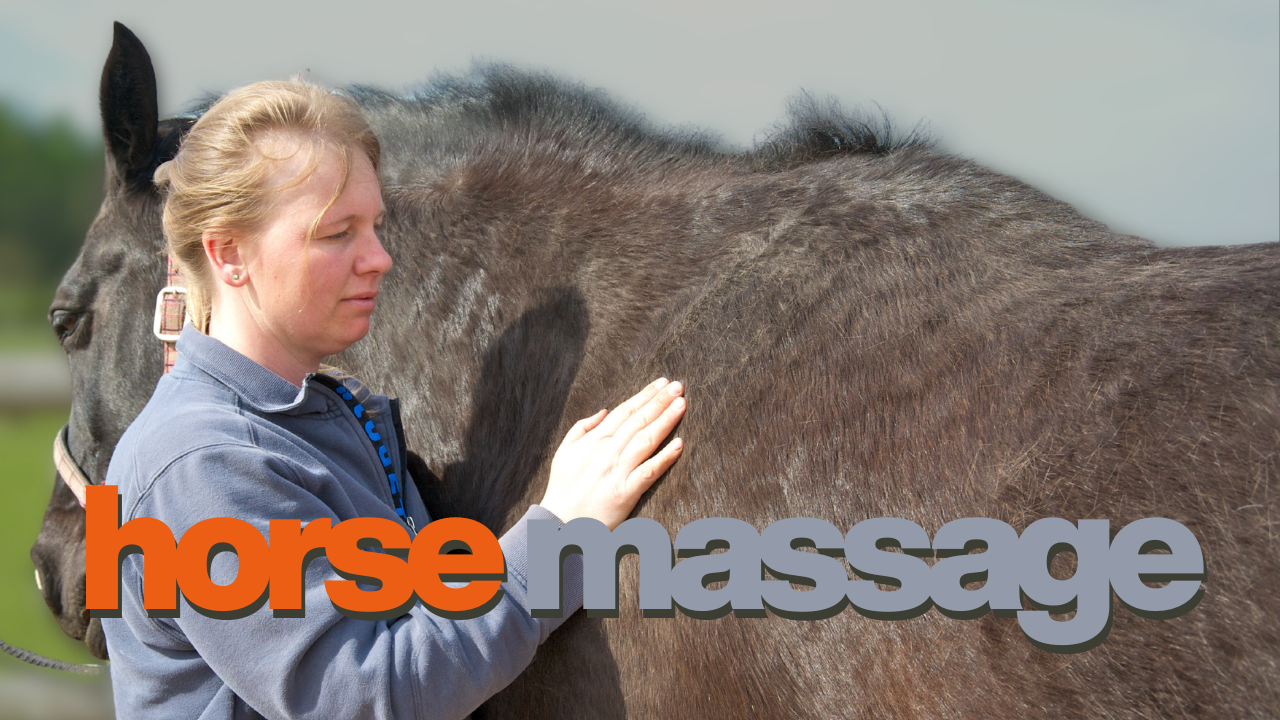
I've never been sure if my horse Giles likes a groom what does it mean when he turns his head to look at me. He has always done it. Is he checking in, are we having a moment or is it the horse equivalent of a pointed look at the dentist? And then there's the other end of that spectrum: the spot behind his shoulder where the brush lands and something in him just gives. The head drops, the eyes go soft, he leans in. That I'm fairly sure he likes. In this episode Sue Palmer helps us to read these moments.
There is a moment in this conversation that I keep returning to. Sue is describing what she calls fasciculation — the twitchy, rippling skin response that happens when you run your hand along a horse's girth area. Most people call it ticklishness. Yards are full of horses that are "just a bit tickly there." Sue is unambiguous: it is not ticklishness. It is a sign of irritation. A sign the horse is not comfortable.
It is such a small thing. And it gets dismissed so routinely that most of us have probably never questioned it. Which is, of course, exactly the kind of moment this podcast exists for.
Sue Palmer is a chartered physiotherapist who works with horses and riders; she is also the author of Horse Massage for Horse Owners an co-author, with Sue Dyson, of Harmonious Horsemanship. Her work sits at the intersection of pain science and what she simply calls listening. Her mission, which she has put a date on, is that by 2030 every equestrian will understand that pain and behaviour are linked. That a horse labelled difficult or lazy or naughty deserves a physical question mark before anything else.
The conversation covers horse massage as a practical tool for owners, not just professionals. Three checks you can do every week (grooming reactions, carrot stretches in both directions, a tight circle on both reins) that build up a picture of what's normal, so you notice when something changes. Why softer and slower is almost always the right direction. How to read what a comfortable horse looks like during bodywork, and what discomfort actually signals: ears, tail, the head swinging round, all of it communication rather than attitude.
She also shares the case of Alice and Star, a horse whose kissing spine was found on X-ray and dismissed as irrelevant. Alice kept saying something was not right. It took one more assessment and a nerve block to confirm she had been correct all along. Star became a different horse. It is a reminder that owners are often right, and that persistence in asking the question is not stubbornness; it is advocacy.
For the practical piece: once a week is Sue's baseline for horse owners. Before exercise if the horse tends to be stiff; after if you've worked hard. A full session runs around 45 minutes, but three focused minutes on something specific (poll tension, girth sensitivity), done consistently, matters. The most important thing is being present when you do it. Trying to massage while the rest of the yard is being turned out is, Sue says, probably not the right time.
This week's after-hours
Anna Louise takes Sue into Curious Equestrian's green room for a listener Q&A, and the conversation gets specific fast.
To Laura, whose mare has intermittent lameness and no firm diagnosis, Sue's first word is unambiguous: vet. Then she talks through what comes after, and how to simply, safely begin using your hands as the starting point for everything.
To David, who improvises his way through a massage session, she has some reassurance, and a clear signal to watch for when you've pushed too far.
And somewhere in between, she talks about the part of the job that keeps her in it. 👇