Swapping hay? Horse nutritionist explains why it takes 7-10 days
But Claire’s advice was practical. She calls it the "Overlap Strategy." It means keeping just three or four bales of the old batch back, specifically to mix in when the new load arrives. It is a tiny logistical change that protects the gastric health we spend a fortune trying to fix.

When I brought my horse home, I spent two weeks obsessively transitioning his feed. He'd been on a a performance mix that looked like sticky muesli, and I wanted to switch him to a forage feed, so I weighed every scoop, tracked every ratio, and made sure the changeover was meticulous.
The hay? I didn't give it a second thought. If he turned his nose up at a bale, I'd swap it with another livery down the aisle until we found one he liked. To me, hay was just hay.
I also didn't know, at the time, that you could speak to an independent nutritionist. I was happy with the feed company helpline, but I think I would have felt more at ease knowing the advice wasn't attached to a sales target.
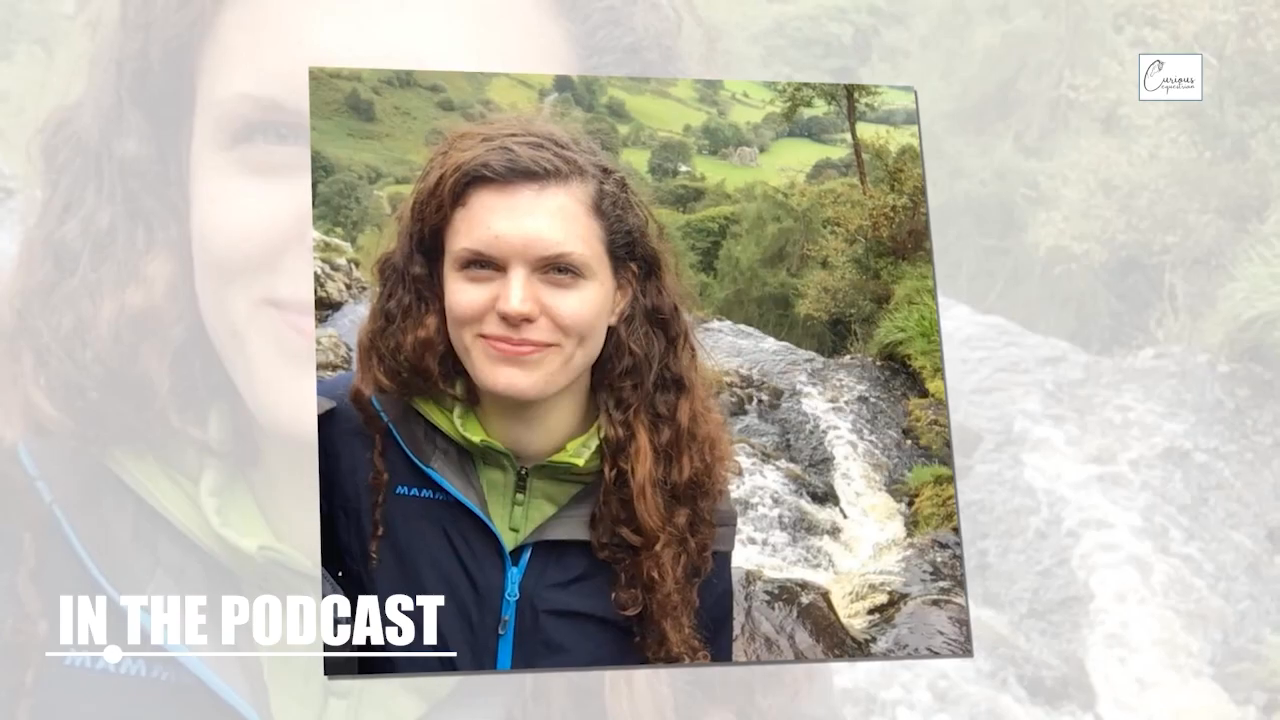
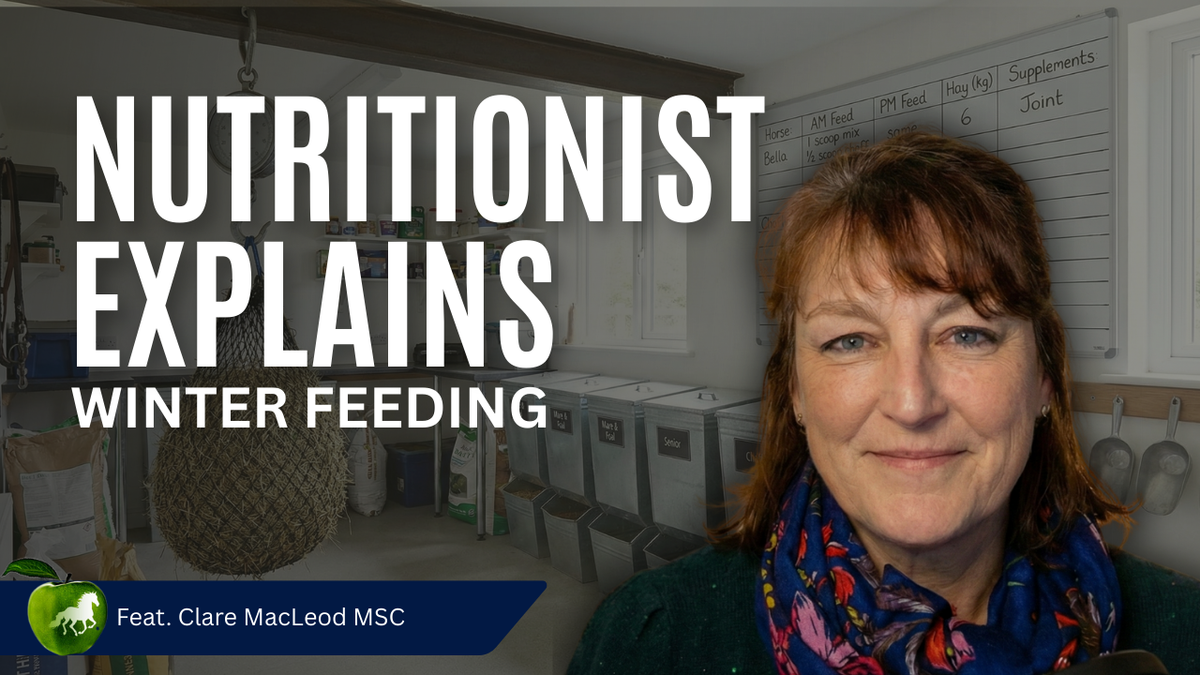
When Anna Louise sat down with Clare MacLeod, an independent equine nutritionist with over 28,000 Facebook followers, I realised there is a lot more to hay than I had understood. And that my meticulous bucket work had been slightly missing the point.
You have probably done this. The hay delivery arrives, the old batch runs out on the same day, and you swap straight over. New bales, same nets, no second thought.
Most of us know to change bucket feed gradually. That is basic pony club knowledge. But Clare MacLeod, who has spent more than two decades working as an independent equine nutritionist, pointed out something that many horse owners have never been told: forage changes are just as important to manage gradually as concentrate changes. The transition from grass to conserved forage, or from one batch of hay to another, is the highest risk factor for colic in winter.
That alone is worth sitting with. We fuss over the bucket and barely glance at the hay.
Why your weight tape matters more than your supplement shelf
Clare's second piece of advice surprised me even more. She recommended that every horse owner use a weight tape regularly through winter, not because weight tapes are accurate for kilos (they are not), but because they catch changes in body fat faster than your eye will. 'Pop a weight tape around your horse,' she said, 'you can catch changes in body fat quicker than you'll see them by eye.'
This is the part of equine nutrition that rarely makes it into the adverts. No one is selling you a weight tape subscription. But tracking body condition is the single most useful thing you can do to manage your horse's diet through the colder months. It tells you whether to increase calories or reduce them. It tells you whether the forage you are feeding is enough, or whether you need to add something to the bucket to meet their nutrient requirements.
Body weight monitoring comes first. The bucket comes second.
Clare was clear that for a horse maintaining a healthy body condition on ad lib forage, the nutritional requirements beyond that can be straightforward: a good broad-spectrum vitamin and mineral supplement in something palatable, and a salt lick. That is a balanced diet for many horses. Not five different products. Not the latest thing your friend's friend is feeding.
The four-hour question
One of the most useful things Clare shared was about fasting. Many owners have heard that horses should never be without forage, and that any gap risks ulcers. Clare explained it differently. Behavioural studies show that horses with free-choice forage naturally have periods of up to four hours without eating during the day. Research suggests stomach health does not start to decline until after six hours.
This matters practically. If you have a horse that needs to lose weight and you have been panicking every time the hay net empties, knowing there is a four-hour daytime window gives you room. It does not mean you should impose a fast, and Clare was clear that lowering forage calories (through soaking hay or using straw) is better than restricting quantity. But the nuance helps. Not every empty hay net is an emergency.
Looking at the horse, not the internet
What came through most strongly in this conversation was Clare's insistence on individual observation over general rules. On rugging, on feeding, on turnout, her answer kept returning to the same place: 'Look at the horse in front of us.'
Horse nutrition is full of confident voices telling you what to do. Feed companies with marketing budgets, social media posts with absolute certainty, yard mates with strong opinions. Clare described how 'marketers are experts in creating doubt,' and that even owners with perfectly good feeding routines can end up second-guessing themselves after scrolling through adverts.
An independent nutritionist, she pointed out, is not attached to a product range. A yearly check-in with one can give you something worth more than any supplement: confidence that what you are already doing is right.
The full conversation between Anna Louise and Clare covers the hay crisis, the rugging debate, how to weigh out forage, and why the best horse feed advice often starts with 'it depends.' You can listen to the episode on The Curious Equestrian podcast.
Worth reading this week
- Clare MacLeod's website: Clare offers a quick horse feed check service as well as full nutrition consultations, plus free educational resources and webinars.
- Prospective study of equine colic risk factors (Tinker et al., 1997): The epidemiological research Clare referenced, showing that changes in hay feeding and high concentrate levels significantly increase colic risk.
- Clare MacLeod on Facebook: The page Anna Louise described as one of her favourite places on the internet for horse care discussion, with nearly 29,000 followers and genuinely open debate.
If this resonated, these two episodes are worth your time
A Vet's Guide to Weight Management
Anna Louise talks to vet Katie Kershaw about equine obesity, the fact that around 40% of UK leisure horses are overweight, and why the way we keep horses today makes it so hard to manage. Clare MacLeod touches on body condition and weighing in this episode; this one goes much further into the problem.
Wild Wisdom: Nutrition and Self-Healing for Horses
Biologist and author Cindy Engel on what wild animal behaviour tells us about equine nutrition and self-healing. If Clare's point about forage being central to everything made you curious about why horses are wired the way they are, this is the episode that sits underneath it.
The "after-hours" tapes
The recording light went off. Anna Louise put down her notes. But we had one more question.
In an industry full of "Gurus" telling us exactly what to do, Claire stands out because she often says the one thing we hate hearing: "It depends."
We wanted to know how she navigates a social media world that demands "Black and White" answers. Her response was a defense of the one thing missing from most Facebook groups: Nuance.
If you’re in the Herd (it's free!), that conversation is below.