Swapping hay? Horse nutritionist explains why it takes 7-10 days
But Claire’s advice was practical. She calls it the "Overlap Strategy." It means keeping just three or four bales of the old batch back, specifically to mix in when the new load arrives. It is a tiny logistical change that protects the gastric health we spend a fortune trying to fix.

I clearly remember the obsessive effort I put into changing my horse's feed when I brought him home. The trainer had him on a 'performance' mix that looked like sticky muesli, but I wanted to switch him to a forage feed.
I spent two weeks studiously mixing the feeds, weighing every scoop to ensure the transition was perfect.
But the hay? I didn't give it a second thought.
Turns out he is quite fussy about his hay, so if he turned his nose up at a bale, I would just swap it with another livery down the aisle until we found one he liked. To me, hay was just hay.
At the time, I didn't even know you could speak to an independent nutritionist. I was happy with the advice from the feed company helpline, but I think I would have felt more at ease knowing the advice wasn't attached to a sales target.
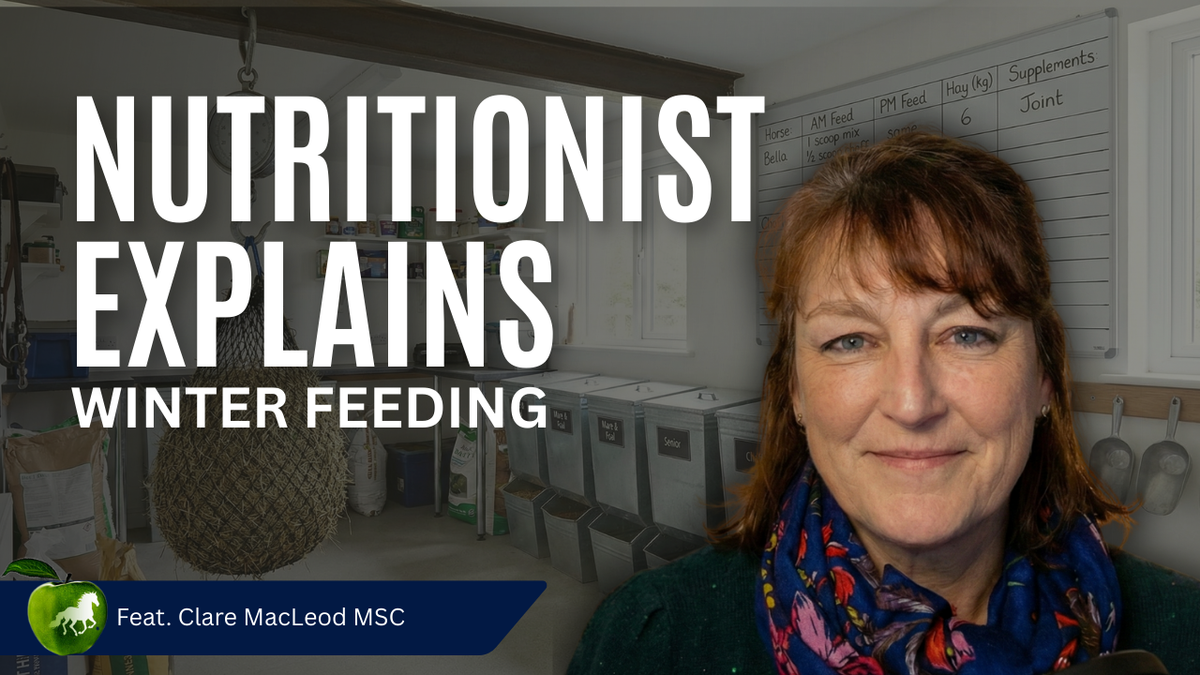
When Anna Louise sat down with independent nutritionist Claire MacLeod, I realised there's alot more to hay than I realised.
Claire explained that for the gut microbiome, a sudden switch from a "late cut fibrous hay" to a "lush early cut haylage" is a shock to the system. The bacteria in the hindgut simply cannot adapt fast enough.
Claire confirmed that rapid forage changes are the single highest risk factor for colic in winter. Higher than grain changes. Higher than stress.
I was so careful transitioning that sticky mix. But with the hay, I was relying on luck.
I expected Claire to say a transition should take a day or two. She said seven to ten days.
I know what you are thinking. "Theresa, I don't have space to store two types of hay." I thought the same.
But Claire’s advice was practical. She calls it the "Overlap Strategy." It means keeping just three or four bales of the old batch back, specifically to mix in when the new load arrives. It is a tiny logistical change that protects the gastric health we spend a fortune trying to fix.
This conversation changed how I view my feed room. Clare covers the "four-hour fasting window," the truth about rugging, and how to survive the current forage crisis without causing colic. You can listen to the full episode here:
The "after-hours" tapes
The recording light went off. Anna Louise put down her notes. But we had one more question.
In an industry full of "Gurus" telling us exactly what to do, Claire stands out because she often says the one thing we hate hearing: "It depends."
We wanted to know how she navigates a social media world that demands "Black and White" answers. Her response was a defense of the one thing missing from most Facebook groups: Nuance.
If you’re in the Herd, that conversation is below.