Give Them Choice. Why Track Systems Work.
I've always known track systems were about movement and forage and hoof health. I hadn't properly understood they were about giving horses back their choices.

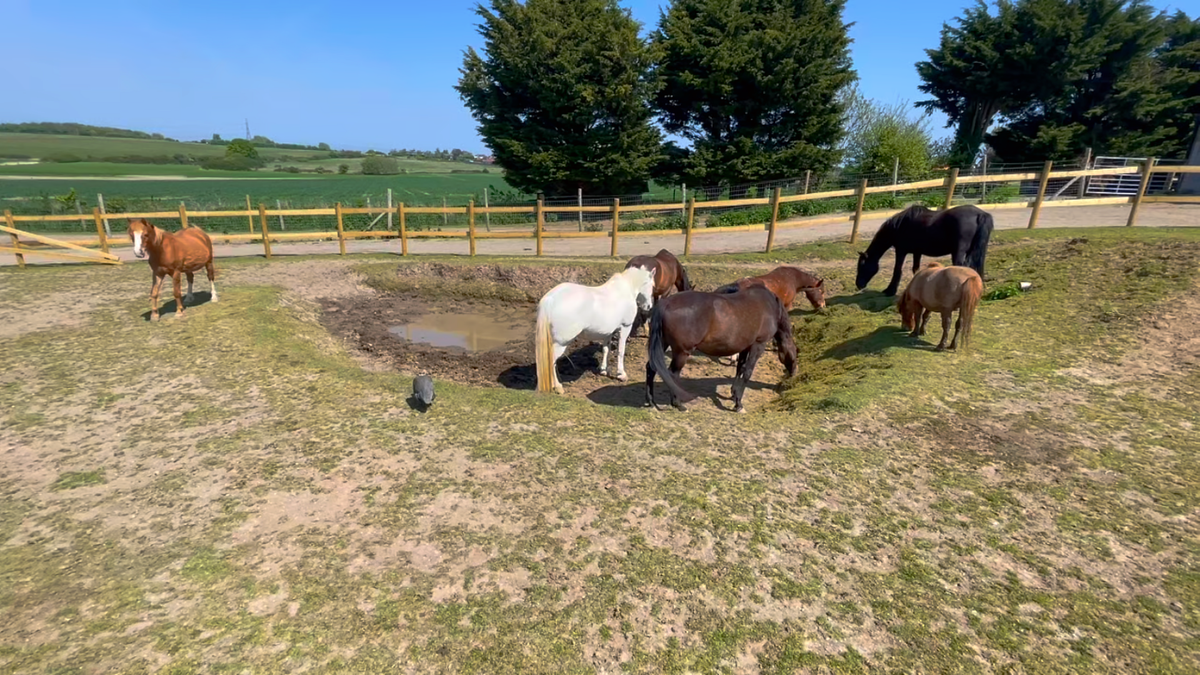
As regular viewers will know, both Anna Louise and I are advocates of Track systems for horses. I moved my horse to a track system in 2021, took the shoes off, and now my horse is comfortable and happy. And every time I watch him on the track with his herd, I think about what would have happened if I hadn't stumbled across this completely different way of keeping horses.
Watch or Listen on Spotify
When Anna Louise sat down with Lauren Johnson from Graveney Equine, I was preparing for an episode about paddock paradise philosophy. What I got instead was a story that mirrored my own, but started 15 years earlier, when nobody in the UK had even heard the term "track system."
Why this matters now
Track systems used to be fringe. When Lauren set up her first one in 2010, she couldn't find a single person on social media doing it. The Facebook group she co-founded trudged along with a few thousand members for years.
Then something shifted. In the last three or four years, membership exploded. The questions changed from "what is this?" to "how do I build one?"
The reasons Lauren identified match exactly what I'm seeing in the forums and on the yard:
Weather extremes are making traditional turnout impossible. Owners are being told no turnout during wet months, which means horses standing in stables for weeks on end.
Metabolic issues are everywhere. Grass in the UK is largely optimised for dairy cattle, we're feeding bagged feeds with excess nutrition, and we're wondering why laminitis and EMS are so common.
What Hadn't occurred to me
About forty minutes into the conversation, Lauren said something that reframed how I think about keeping horses: "Getting to watch an animal have autonomy is just, it's a feeling I really struggle to describe."
She talked about horses filling their own day. Choosing which horses to spend time with. Picking whether to stand , or to lay in the sand. Wandering to the hedgerow to self-medicate on rosehips and hawthorn berries.
I've always known track systems were about movement and forage and hoof health. I hadn't properly understood they were about giving horses back their choices.
Lauren described what happens when owners first bring their horses to a track livery. The horses settle within days. The owners often take months.
"I've had owners that just can't cope with or really struggle to cope with and process that complete change in everything. And one of the main things is that their horse stops needing them."
She was blunt about it: when you keep a horse in a way that takes away the vast majority of their choices, the relationship becomes dependency. "where the horse is completely dependent on the owner for everything they need."
I think about the horses I've owned over the years, heads over stable doors, whinnying when I arrived. I always interpreted that as affection. Lauren's suggesting it might have been something closer to desperation.
The practical reality
Lauren started with £300. That's it. Electric fencing, battery energiser, tape, and posts. One acre, fenced into a track.
Within four months, her two-year-old's toe cracks (which a farrier had quoted £800 to resection, fill with resin, and shoe) had grown out completely. The barefoot trimmer she found, who was still training and came out as a case study for £20, solved what the traditional route couldn't.
Her current setup at Graveney Equine includes:
- A mile-long track with multiple loops
- A 45x90ft barn with rubber matting and hemp bedding, open to horses at all times
- A sandpit (25m x 8m) and a gravel pit (16m x 10m)
- A wood chip resting area on raised, free-draining ground
- Metres of planted hedgerow and trees
- A mound made from excavated soil that the horses use as a lookout point
The ongoing maintenance, she says, isn't overwhelming. "Certainly no difference to any other livery yard, to be honest. It's just slightly different things, perhaps."
The real cost isn't money. It's land access. Anna Louise made the point that resonates with so many of us: "We're at the mercy of landowners that don't want poaching." If you rent your grazing, you can't dig up the middle and lay surfaces.
The owner adjustment
Lauren's observation about owners struggling more than horses stuck with me. She said the horses tend to just be like, "okay, this is the new thing, we'll get on with this." Meanwhile their humans are grappling with a complete identity shift.
When your horse doesn't need you for food, shelter, company, or entertainment, you have to build something different. Something based on choice rather than dependency. Lauren calls it "a completely different relationship" and says it takes time for people to trust it.
I'm still thinking about that.
Lauren Johnson
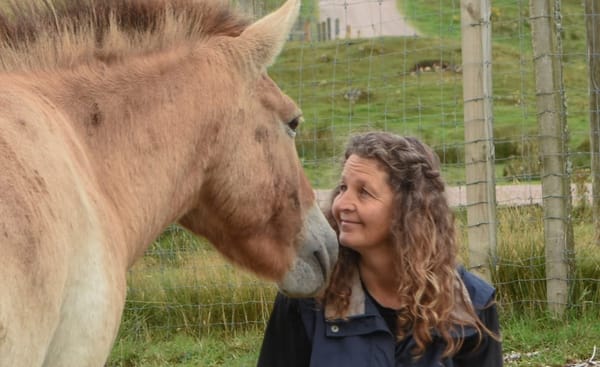
Lauren runs Graveney Equine in Kent and co-administers the Horse Track System Facebook group, which has grown from a handful of curious owners to a thriving community. She won Best Livery Yard of the Year at the Equestrian Business Awards, and listening to her talk about watching horses have autonomy, I understand why.
Resources Mentioned: https://www.facebook.com/graveneyequinenaturaltrack/ https://www.facebook.com/groups/808480805889892?locale=en_GB
Watch on YouTube
Have you made the transition to track living, either at home or through livery? What surprised you most about the adjustment, for you or your horse?